Custom Silicon Nitride Ceramic Parts & Components (Si₃N₄)
Direct-factory multi-axis diamond grinding of conventionally sintered Silicon Nitride components. Engineered for superior thermal shock resistance, extreme mechanical toughness, and high mechanical fatigue limits.
Strategic Manufacturing Advantage
Our factory excels in grinding complex Si₃N₄ micro-features, thread milling, and deep slotting, completely overcoming material brittleness to deliver robust high-frequency testing components.
Key Material Properties
Quantitative engineering data for design validation and material selection
Why Choose Silicon Nitride?
Si₃N₄ delivers a strong combination of strength, toughness, and thermal shock resistance:
- Maximum Mechanical Strength: Flexural strength of 650-750 MPa exceeds all other technical ceramics, enabling highly stressed structural components.
- Superior Thermal Shock Resistance: Withstands rapid temperature transitions of ΔT ≥ 550°C without cracking, critical for components exposed to extreme thermal cycling.
- Low Density, High Strength: Specific strength (strength-to-weight ratio) surpasses most superalloys, ideal for high-speed rotating applications like ball bearings.
Why Is Silicon Nitride Selected for High-Performance Mechanical Components?
Silicon nitride (Si₃N₄) is selected for high-performance mechanical components requiring exceptional strength, toughness, and thermal shock resistance. With flexural strength of 650-750 MPa and fracture toughness K1C ≥ 5.0 MPa·m½, Si₃N₄ withstands severe mechanical loading without catastrophic failure. Its thermal shock capability (ΔT ≥ 550°C) enables components to survive rapid temperature transitions in aerospace bearings and semiconductor testing fixtures. The material's low density (3.15-3.20 g/cm³) combined with high strength supports high-speed rotating applications, while its electrical insulation properties suit probe card components in IC testing.
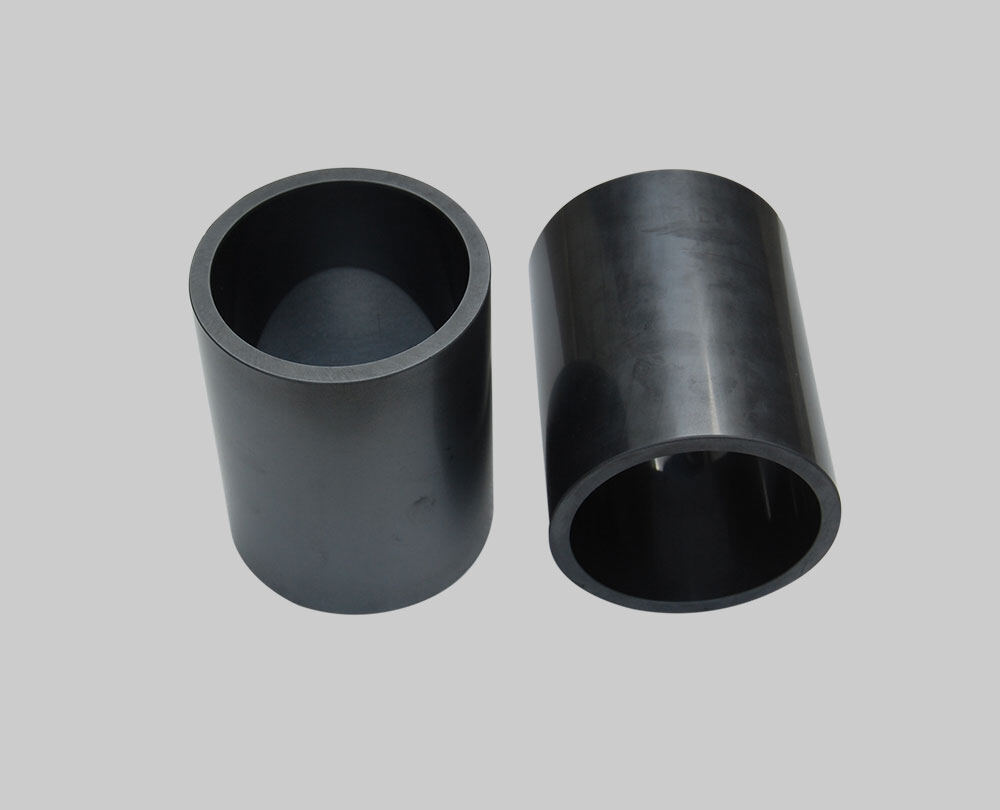
Precision Silicon Nitride Ceramic Parts
High-Value Applications
Proven performance in semiconductor testing, aerospace engineering, and industrial processing
Advanced Semiconductor Packaging & Testing
- •High-precision IC testing probe card insulating plates
- •High-speed pick-and-place nozzles
- •Wafer lift pins
- •Test socket components
Severe Aerospace & Industrial Engineering
- •High-temperature severe-service ball bearings
- •Locator pins
- •Non-conductive welding rollers
- •Automotive sensor guides
Industrial Processing & Automation
- •Metal forming extrusion dies
- •Severe-service automation guides
- •Chemical pump wear components
- •Cutting tool inserts
Typical Mechanical & Thermal Properties
Reference data for Conventionally Sintered Silicon Nitride at room temperature
| Property | Test Method | Unit | Value |
|---|---|---|---|
| Density | ISO 2738 | g/cm³ | 3.18 |
| Flexural Strength | ISO 14704 | MPa | 700 |
| Young's Modulus | ISO 17561 | GPa | 300 |
| Vickers Hardness | ISO 6507 | HV0.5 | ≥ 1500 |
| Fracture Toughness | ISO 23146 | MPa·m½ | ≥ 5.0 |
| Thermal Conductivity | ISO 22007 | W/m·K | 22 |
| Coefficient of Thermal Expansion | ISO 11372 | x10⁻⁶/K | 3.0 - 3.3 |
| Dielectric Strength | IEC 60243 | kV/mm | ≥ 15 |
| Volume Resistivity | IEC 60243 | Ω·cm | > 10¹⁴ |
| Max Service Temperature | Continuous | °C | 1200 |
Why Engineers Select Silicon Nitride: Property-to-Function Relationships
How material properties translate into engineering performance for precision ceramic components
High Flexural Strength (650-750 MPa)
→ Structural Load Capacity
Highest bending strength among technical ceramics enables highly stressed structural components in bearings, probe cards, and industrial tooling.
Thermal Shock Resistance (ΔT ≥ 550°C)
→ Rapid Temperature Transition Survival
Withstands sudden heating and cooling cycles without cracking, critical for aerospace bearings and semiconductor testing fixtures.
Fracture Toughness (K1C ≥ 5.0 MPa·m½)
→ Impact & Mechanical Shock Resistance
Resists crack propagation under impact loading, providing reliability in rotating bearings and high-vibration environments.
Low Density (3.15-3.20 g/cm³)
→ High-Speed Rotation Capability
Specific strength surpasses most superalloys, enabling high-speed ball bearings with reduced centrifugal stress.
Precision Machining Considerations for Si₃N₄
Manufacturing capabilities and engineering considerations specific to silicon nitride ceramics
Complex Micro-Feature Grinding
Multi-axis CNC grinding for intricate geometries, micro-slots, deep pockets, and fine details while preventing edge chipping and subsurface damage.
Thread Milling & Tapping
Precision internal and external thread grinding for Si₃N₄ components, enabling direct ceramic threading without metal inserts for high-temperature assemblies.
Deep Slot & Groove Machining
Diamond wheel profiling and plunge grinding for deep slots (aspect ratios > 5:1) with clean bottoms and vertical sidewalls.
Ball & Sphere Grinding
Precision grinding of Si₃N₄ balls and spherical components for bearing applications, achieving G10 grade sphericity and sub-micron surface finish.
Thin-Wall Component Machining
Specialized fixturing and optimized grinding parameters enable thin-wall Si₃N₄ structures (down to 0.5 mm) without fracture or distortion.
Complete Metrology Validation
100% inspection using calibrated CMM, optical comparators, and surface roughness testers with comprehensive FAI/OQC documentation.
Inspection & Verification for Si₃N₄ Components
Matching component features to appropriate inspection methods ensures dimensional accuracy and surface quality
| Component Feature | Inspection Method | Capability |
|---|---|---|
| Ball sphericity (G10 grade) | Roundness Inspection | High-precision spherical form measurement |
| Critical dimensions (±0.003 mm) | CMM / Video Measurement | Full 3D coordinate measurement |
| Thread features | Thread gauges / CMM | Internal and external thread verification |
| Surface finish | Roughness Measurement | Contact profilometry |
| Complex profiles | Video Measurement System | Non-contact optical profiling |
| Height / Step dimensions | Trimos Height Gauge | Precision vertical measurement |
Engineering Considerations
Achievable tolerance, surface finish, and feature size depend on:
- Material grade
- Part size
- Geometry complexity
- Feature location
- Aspect ratio
- Surface requirements
- Inspection method
- Batch quantity
Validate Your Silicon Nitride Component Design with Korecera
Submit your 2D engineering blueprints or 3D CAD files (.STEP / .IGS) below. Our expert engineering team will conduct an in-depth Design-for-Manufacturability (DFM) review and deliver a competitive direct-factory quote. Fast-track prototyping completed within 7-10 business days. Full FAI, OQC, and material traceability reports provided upon delivery.
Strict NDA Protection for Customer Drawings and Project Information