Kundenspezifische Keramikringe & Dichtringe
Direkte Präzisionsbearbeitung von technischen Keramikringen aus Aluminiumoxid, Zirkonoxid, Siliziumkarbid und Siliziumnitrid. Von mechanischen Dichtflächen bis zu Halbleiterkammer-Isolationsringen — nach Zeichnungsspezifikation gefertigt.
Ringfertigungskapazitäten
OD bis 300 mm, Toleranz bis ±0,003 mm, Rundheit bis 0,0005 mm und Dichtflächenplanheit bis 1 Lichtband. Oberflächengüte bis Ra 0,02 μm. Alle Ringe 100% inspiziert mit KMG, optischem Komparator und Planheitsmessgerät.
Verfügbare Ringmaterialien
Wählen Sie das Keramikmaterial, das am besten zu Ihrer Anwendungsumgebung passt
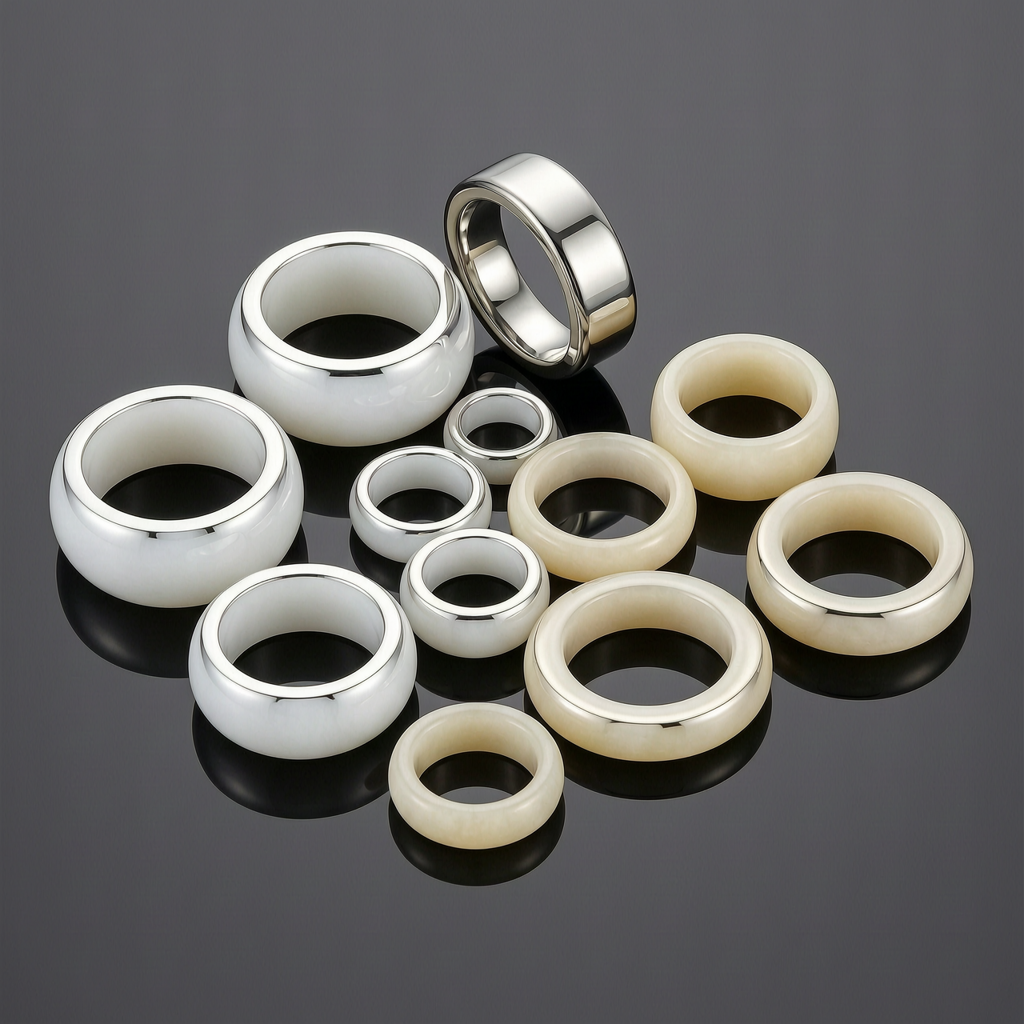
Alumina (Al₂O₃)
Grade: 95%, 99.5%, 99.8%
High dielectric strength, excellent wear resistance, cost-effective for general industrial use
Zirconia (ZrO₂)
Grade: Y-TZP
Highest fracture toughness among ceramics, self-lubricating surface, ideal for mechanical seals
Silicon Carbide (SiC)
Grade: Sintered, Reaction-bonded
Extreme hardness, chemical inertness, suitable for aggressive media and high-wear seal faces
Silicon Nitride (Si₃N₄)
Grade: Sialon, SSN
High strength at temperature, thermal shock resistance, low density for high-speed rotating seals
Ringtypen & Konfigurationen
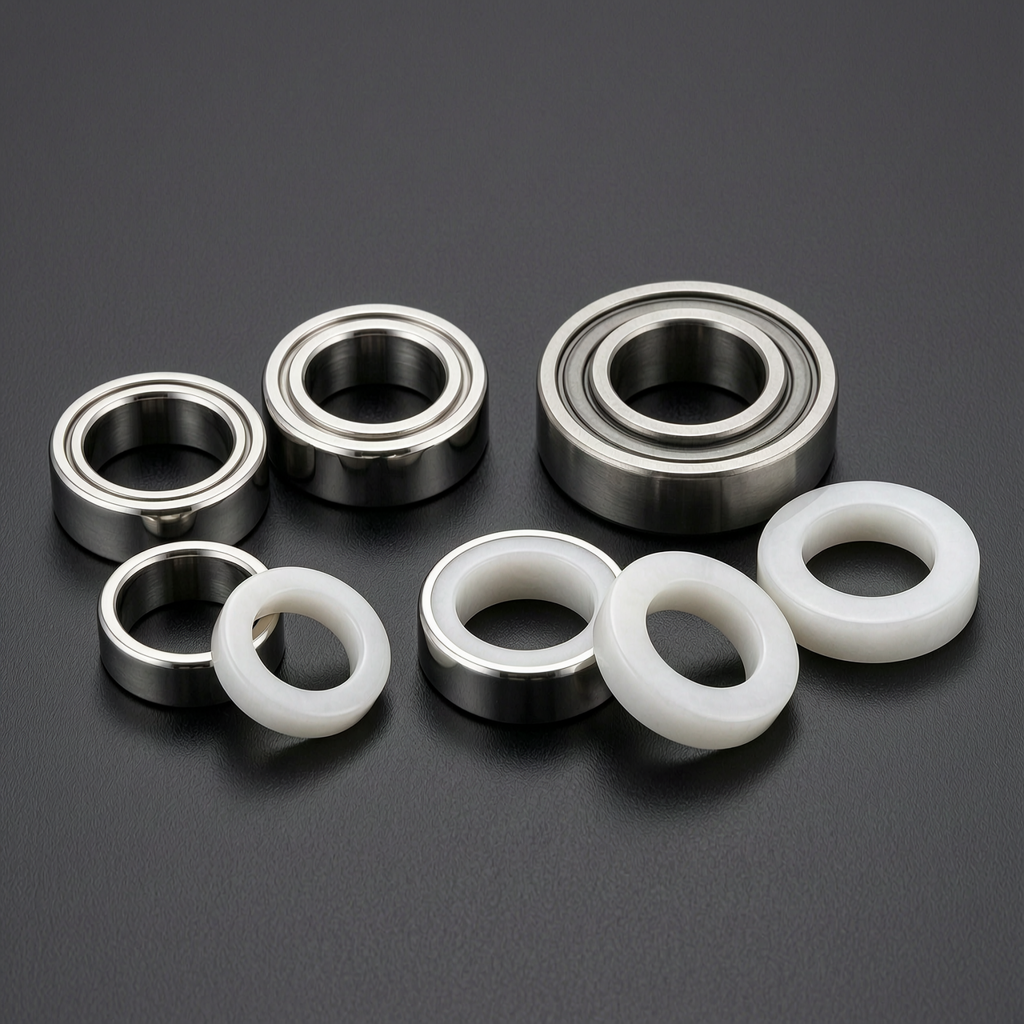
Mechanical Seal Rings
Precision flat-lapped seal faces and mating rings for pumps, compressors, and rotating equipment. Surface flatness to light band flatness.
Insulating Rings & Standoffs
Electrical isolation rings for semiconductor chambers, vacuum feedthroughs, and high-voltage bushings. Custom bore/OD profiles.
Bearing Rings & Races
Ceramic bearing inner/outer races and ball retainer rings for high-speed, high-temperature, and corrosive environments.
Wear Rings & Guide Rings
Sacrificial and protection rings for abrasive media handling, slurry pumps, and material transport systems.
Retention & Snap Rings
Precision-machined retaining rings with internal/external grooves, chamfers, and snap features for assembly integration.
Custom Flanged Rings
Flanged rings, stepped rings, and rings with cross-drilled holes or tapped features per engineering drawing.
Präzisionsfähigkeiten
Tatsächlich erreichbare Toleranzen hängen von Material, Geometrie, Merkmalabmessungen und Zeichnungsanforderungen ab.
Zielanwendungen
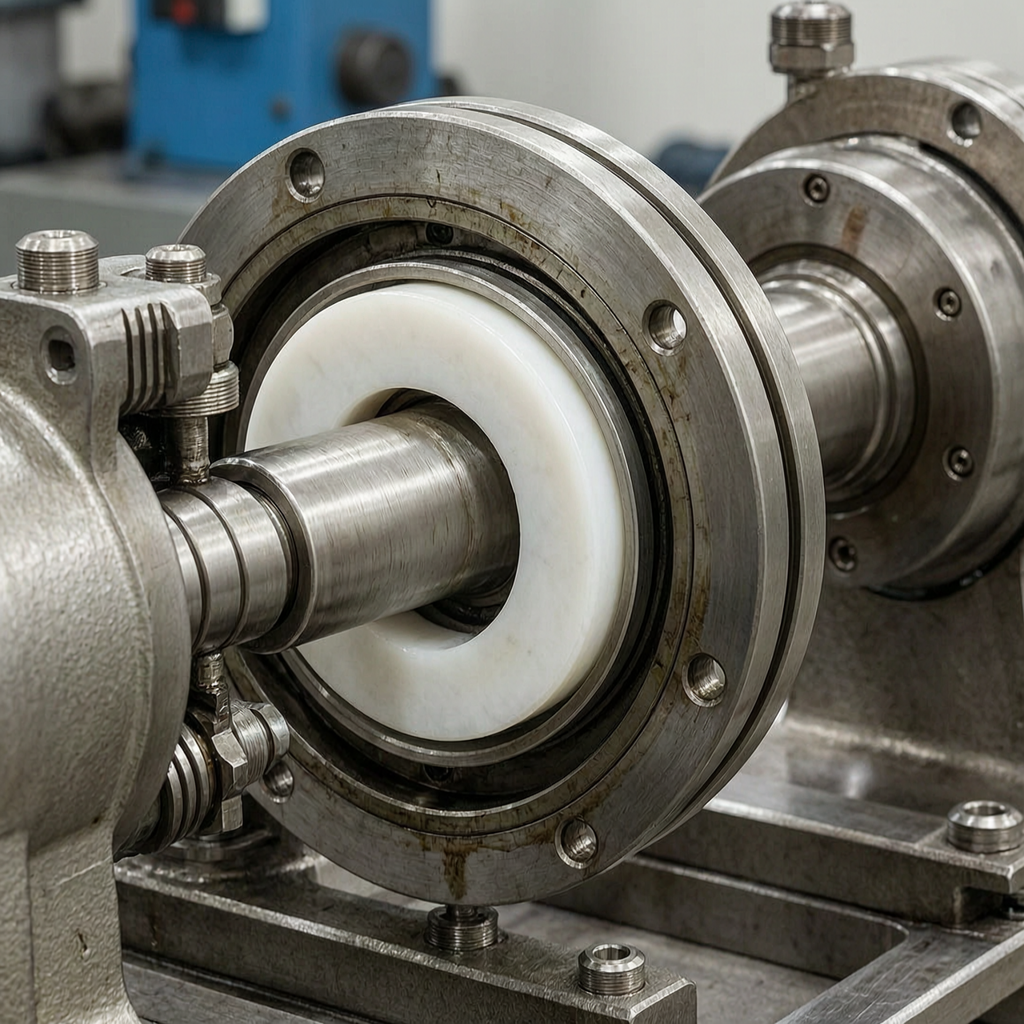
Halbleiterausrüstung
- -Chamber isolation rings
- -Focus ring (edge ring)
- -Showerhead retaining rings
- -Wafer handling robot end-effector rings
Pumpen & Kompressoren
- -Mechanical seal faces
- -Wear rings
- -Throttle bushings
- -Impeller wear rings
Elektrik & Energie
- -High-voltage insulator rings
- -Bushings
- -Pot core rings
- -Transformer isolation rings
What Are Precision Ceramic Rings Used For?
Precision ceramic rings are engineered components used for sealing, electrical insulation, wear protection, and mechanical alignment in demanding industrial environments. Manufactured from technical ceramics such as alumina, zirconia, silicon carbide, and silicon nitride, these rings maintain dimensional stability under thermal cycling, chemical exposure, and abrasive wear. Typical applications include mechanical seal faces in pumps, chamber isolation rings in semiconductor equipment, bearing races for high-speed rotation, and electrical insulators in power systems. Final tolerances and surface finishes depend on material selection, part geometry, and specific application requirements.
Critical Features of Ceramic Rings
| Feature | Engineering Significance | Inspection Method |
|---|---|---|
| Outer Diameter (OD) | Housing fit, assembly clearance | CMM / OD gauge |
| Inner Diameter (ID) | Shaft fit, bore alignment | CMM / bore gauge |
| Wall Thickness | Structural integrity, pressure resistance | CMM / micrometer |
| Roundness | Sealing effectiveness, rotation balance | Roundness tester |
| Concentricity | ID-to-OD relationship, uniform wall | CMM / roundness tester |
| Flatness (seal faces) | Seal leakage prevention | Optical flat / laser interferometry |
| Parallelism | Even load distribution | Surface plate / height gauge |
| Surface Finish | Friction, wear, particle generation | Roughness tester (profilometry) |
Capability Context
The following capabilities represent demonstrated manufacturing results. Final achievable tolerances depend on material grade, part size, geometry complexity, and inspection requirements.
| Feature | Representative Capability | Applicable Context | Inspection |
|---|---|---|---|
| OD Tolerance | ±0.003 mm | Standard rings, OD up to 300 mm | CMM |
| ID Tolerance | ±0.003 mm | Ground bores, size dependent | CMM / bore gauge |
| Roundness | ≤0.0005 mm | Zirconia, Si₃N₄ rotational components | Roundness tester |
| Flatness | 1 light band | Seal faces, lapped surfaces | Optical flat |
| Surface Finish | Ra 0.02 μm | Mirror polished seal faces | Roughness tester |
| Max OD | 300 mm | Standard grinding capacity | Dimensional |
Capabilities shown represent demonstrated or achievable manufacturing results. Final tolerances depend on ceramic material, part size, geometry, feature location, wall thickness, surface requirements and inspection method. Requirements are confirmed during drawing review.
Manufacturing Process for Ceramic Rings
OD Grinding
Precision cylindrical grinding of outer diameter to achieve dimensional tolerance and roundness. Applicable to all ceramic materials.
ID Grinding
Internal diameter grinding for bore accuracy and concentricity. Size dependent based on part geometry.
Flat Lapping
Precision lapping of seal faces to achieve light band flatness and Ra 0.02 μm surface finish. Critical for mechanical seals.
Mirror Polishing
Mirror finish polishing for low-friction, low-particle applications. Confirmed for Zirconia and SiC cylindrical surfaces.
Complex Feature Machining
CNC milling of grooves, holes, chamfers, and custom profiles per drawing specification. ±0.003 mm per face capability.
100% Inspection
Full dimensional and visual inspection per agreed quality plan. CMM reports and surface finish measurements included.
What to Include in Your Ring Drawing or RFQ
Dimensions & Tolerances
OD, ID, width, wall thickness with geometric tolerances (roundness, concentricity, flatness, parallelism). Include GD&T callouts.
Material Specification
Ceramic type (Alumina, Zirconia, SiC, Si₃N₄), grade, and purity level. Application conditions help us recommend optimal material.
Surface Finish Requirements
Specify Ra values for critical surfaces. Standard as-machined: Ra 0.4-0.8 μm. Polished to Ra 0.02 μm available for seal faces.
Quantity & Application
Prototype or production quantity. Include application environment (temperature, media, pressure) for material validation.
Related Engineering Resources
All Ceramic Components
Explore our full range of precision ceramic components
Material Selection Guide
Compare technical ceramic materials for ring applications
Precision Machining Capabilities
Explore our grinding, lapping, and polishing processes
Quality & Inspection
CMM, roundness, surface finish measurement capabilities
Reichen Sie Ihre Ringzeichnung zur Prüfung ein
Laden Sie Ihre 2D-Pläne oder 3D-CAD-Dateien (.STEP / .IGS) hoch. Unser Ingenieurteam führt eine DFM-Prüfung durch und liefert innerhalb von 24 Stunden ein wettbewerbsfähiges Angebot. Prototyp-Ringe in 7-10 Werktagen verfügbar.
Zeichnung zur 24-Stunden-Prüfung einreichen